新書推薦:

《
新安医学古籍整理发掘研究
》
售價:HK$
107.8

《
如何提出一个好问题(全新升级版)
》
售價:HK$
120.9

《
索恩丛书·风雨山河:清季变局中的人物与社会
》
售價:HK$
75.9

《
外太空巨型星座管控的迫切需求
》
售價:HK$
74.8

《
“Z行动”苏联空军志愿队研究(套装全2册)
》
售價:HK$
361.9

《
清华大学藏战国竹简校释(柒):《楚居》诸篇
》
售價:HK$
132.0

《
任伯年册页精选
》
售價:HK$
330.0

《
国之大道G219自驾攻略图——314国道喀什至红其拉甫口岸、独库公路
》
售價:HK$
52.8
|
| 內容簡介: |
|
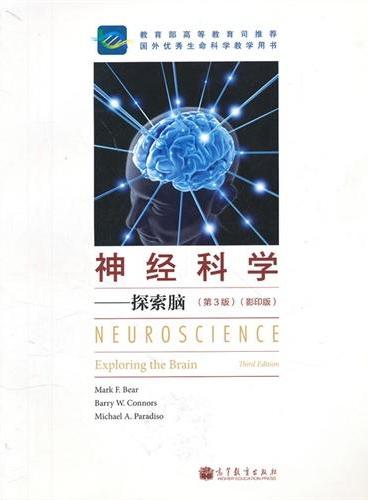
《神经科学:探索脑(第3版)(影印版)》配套网络资源为书中所膏插图的彩色版,搜书中章节顺序排列。网站中所有彩图均可点击放大并下载,是对原书的重要补充和扩展,以方便读者参考使用。
|
| 目錄:
|
Preface
User''s Guide
Acknowledgments
Path of Discovery Authors
Part 1 Foundations
Chapter 1 Neuroscience: Past, Present, and Future
Chapter 2 Neurons and Glia
Chapter 3 The Neuronal Membrane at Rest
Chapter 4 The Action Potential
Chapter 5 Synaptic Transmission
Chapter 6 Neurotransmitter Systems
Chapter 7 The Structure of the Nervous System
Appendix: An Illustrated Guide to Human Neuroanatomy
Part 2 Sensory and Motor Systems
Chapter 8 The Chemical Senses
Chapter 9 The Eye
Chapter 10 The Central Visual System
Chapter 11 The Auditory and Vestibular Systems
Chapter 12 The Somatic Sensory System
Chapter 13 Spinal Control of Movement
Chapter 14 Brain Control of Movement
Part 3 The Brain and Behavior
Chapter 15 Chemical Control of the Brain and Behavior
Chapter 16 Motivation
Chapter 17 Sex and the Brain
Chapter 18 Brain Mechanisms of Emotion
Chapter 19 Brain Rhythms and Sleep
Chapter 20 Language
Chapter 21 Attention
Chapter 22 Mental Illness
Part 4 The Changing Brain
Chapter 23 Wiring the Brain
Chapter 24 Memory Systems
Chapter 25 Molecular Mechanisms of Learning and Memory
Glossary
References and Resources
Index
|
| 內容試閱:
|
As a rule, the more basic the process under investigation,
themore distant can be the evolutionary relationship with humans.
Thus,experiments aimed at understanding the molecular basis of
nerve impulseconduction can be carried out on a distantly related
species, such as thesquid. On the other hand, understanding the
neural basis of movement andperceptual disorders in humans has
required experiments on more closelyrelated species, such as the
macaque monkey. Today, more than half of theanimals used for
neuroscience research are rodents——mice and rats——thatare bred
specifically for this purpose.Animal Welfare. In the developed
world today, most educated adults havea concern for animal welfare.
Neuroscientists share this concern and workto ensure that animals
are well treated. It must also be appreciated, how-ever, that
society has not always placed such value on animal welfare,
asreflected in some of the scientific practices of the past. For
example, in hisexperiments early in the nineteenth century,
Magendie used unanesthetizedpuppies (for which he was later
criticized by his scientific rival Bell). Beforepassing judgment,
consider that the philosophy of Descartes was very influ-ential in
French society at that time. Animals of all types were believed
tobe simple automata, biological machines that lacked any semblance
ofemotion. As disturbing as this now seems, it is also worth
bearing in mindthat humans scarcely had any more respect for one
another than they didfor animals during this period (slavery was
still practiced in the UnitedStates, for example). Fortunately,
some things have changed quite dramat-ically since then. Heightened
awareness of animal welfare in recent yearshas led to significant
improvements in how animals are treated in biomed-ical
research.
|
|

 購物車/收銀台(0) | 在線留言板
| 付款方式
| 運費計算
| 聯絡我們
| 幫助中心 |
加入書簽
購物車/收銀台(0) | 在線留言板
| 付款方式
| 運費計算
| 聯絡我們
| 幫助中心 |
加入書簽 HOME
HOME 新書上架
新書上架 暢銷書架
暢銷書架