新書推薦:

《
棉花王国 密西西比河流域的奴隶制与资本主义 (一部改写美国奴隶制认知的史学佳作)
》
售價:HK$
129.8

《
历史哲学 一部关于世界文明 理性与历史的终极思考
》
售價:HK$
108.9

《
诡舍6完结篇蔽日开天
》
售價:HK$
54.8
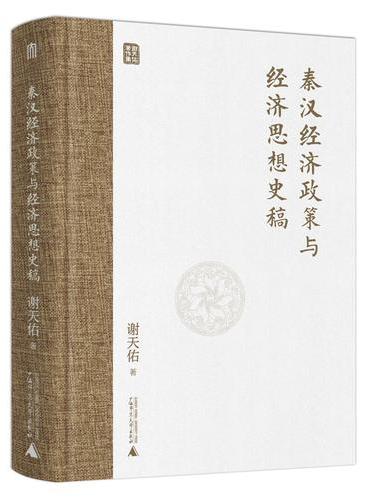
《
大学问·秦汉经济政策与经济思想史稿(jue版好书复活,读懂秦汉,就是读懂中国两千年的经济底色。)
》
售價:HK$
97.9

《
狄仁杰与武则天 武周革命与平民官僚的崛起 钤印版 汗青堂丛书163
》
售價:HK$
96.8

《
自恋主义文化
》
售價:HK$
85.8

《
我是异类,你是怪物
》
售價:HK$
64.9

《
深夜的恋人们
》
售價:HK$
71.5
|
| 內容簡介: |
|
艾克拿默编著的《固体物理学》内容介绍:In selecting the material and the presentation of this textbook I was aiming at the advanced undergraduatefirst year graduate level, or so I was intending. Chapters 1-8 with some possible omissions and additions, depending on the students'' interests and the instructor''s preferences can serve as the core of a senior undergraduate course on Solid State Physics addressed to students in Physics, Chemistry, Materials Science, and Engineering. The book is designed to serve also as a textbook in, a first-year graduate course on the Physics of Solids. Some familiarity with Electromagnetism, Quantum Mechanics, and Statistical Physics is assumed; anyway, extensive outlines of these subjects are presented in Appendices A, B, and C, respectively.
|
| 目錄:
|
Part ⅠAn Overview
1 Basic Principles Summarized
1.1 The Atomic Idea: From ElementaryParticles to Solids
1.2 Permanent i.e., Equilibrium Structures of Matter Correspond to the Minimum of Their Free Energy
1.3 Condensed Matter Tends to Collapse Under the Influence of Coulomb Potential Energy
1.4 Quantum Kinetic Energy Counterbalances Coulomb Potential Energy Leading to Stable Equilibrium Structures
1.4.1 Heisenberg''s Uncertainty Principle and the Minimum Kinetic Energy
1.4.2 Pauli''s Exclusion Principle and the Enhancement of the Minimum Kinetic Energy
1.4.3 Schrodinger''s Spectral Discreteness and the Rigidity of the Ground State
1.5Dimensional Analysis
1.6 Key Points ,
1.7Questions and Problems
2 Basic Principles in Action
2.1Size and Energy Scale of Atoms
2.2 Why do Atoms Come Together to Form Molecules and Solids?
2.3 Ionic Motion:- Small Oscillations
2.4 Why do the Specific Heats of Solids go to Zero as T→OK?
2.5When is Classical Mechanics Adequate?
2.6 Estimating Magnitudes Through Dimensional Analysis
2.6.1Atomic Radius, Ra
……
Part Ⅱ Two Simple Models for Solids
Part Ⅲ More About Periodicity its Consequences
Part Ⅳ Materials
Part Ⅴ Deviations from Periodicity
Part Ⅵ Correlated Systems
Part Ⅶ Appendices
|
|

 購物車/收銀台(0) | 在線留言板
| 付款方式
| 運費計算
| 聯絡我們
| 幫助中心 |
加入書簽
購物車/收銀台(0) | 在線留言板
| 付款方式
| 運費計算
| 聯絡我們
| 幫助中心 |
加入書簽 HOME
HOME 新書上架
新書上架 暢銷書架
暢銷書架






